Introduction
Palm trees are popular additions to Arizona yards because they provide height and character without the aggressive root systems common in other trees. Homeowners in Phoenix and Scottsdale often ask how close palms can safely be planted to a house, pool, or patio.
While palms are generally safer near structures than large shade trees, improper placement can still cause problems over time. Understanding spacing guidelines helps protect your property and ensures your palm grows safely and healthily.
Do Palm Tree Roots Damage Foundations or Pools?
Palm tree roots are fibrous and spread outward rather than deep. Unlike oak or elm trees, palms do not have large, invasive roots that crack foundations.
However, palm roots still need space to grow. If planted too close to a foundation or pool deck, roots can cause soil displacement that leads to uneven concrete or pavers.
Palm roots typically extend outward a distance similar to the tree’s canopy width. Allowing room for this spread reduces long term risk.
Recommended Distance From a House
The ideal distance between a palm tree and a house depends on the species and mature size.
General guidelines include:
- Small palms: at least 3 to 5 feet from the structure
- Medium palms: 6 to 8 feet from the structure
- Large palms: 8 to 12 feet or more from the structure
Taller palms produce heavier fronds that can fall unexpectedly. Giving extra clearance reduces the risk of fronds landing on roofs, windows, or gutters.
Spacing Palm Trees Near Pools
Palm trees near pools create a resort style appearance, but placement must be planned carefully.
Key considerations include:
- Falling fronds can damage pool equipment or decking
- Seed pods and fruit can create debris in the water
- Root growth can affect pool decks or plumbing if space is limited
For most palms, a distance of 6 to 10 feet from the pool edge is recommended. Smaller palms can be planted closer, but they still require routine trimming to reduce debris.
Overhead and Vertical Clearance Matters
Spacing is not just about distance from the base of the tree. Vertical clearance is equally important.
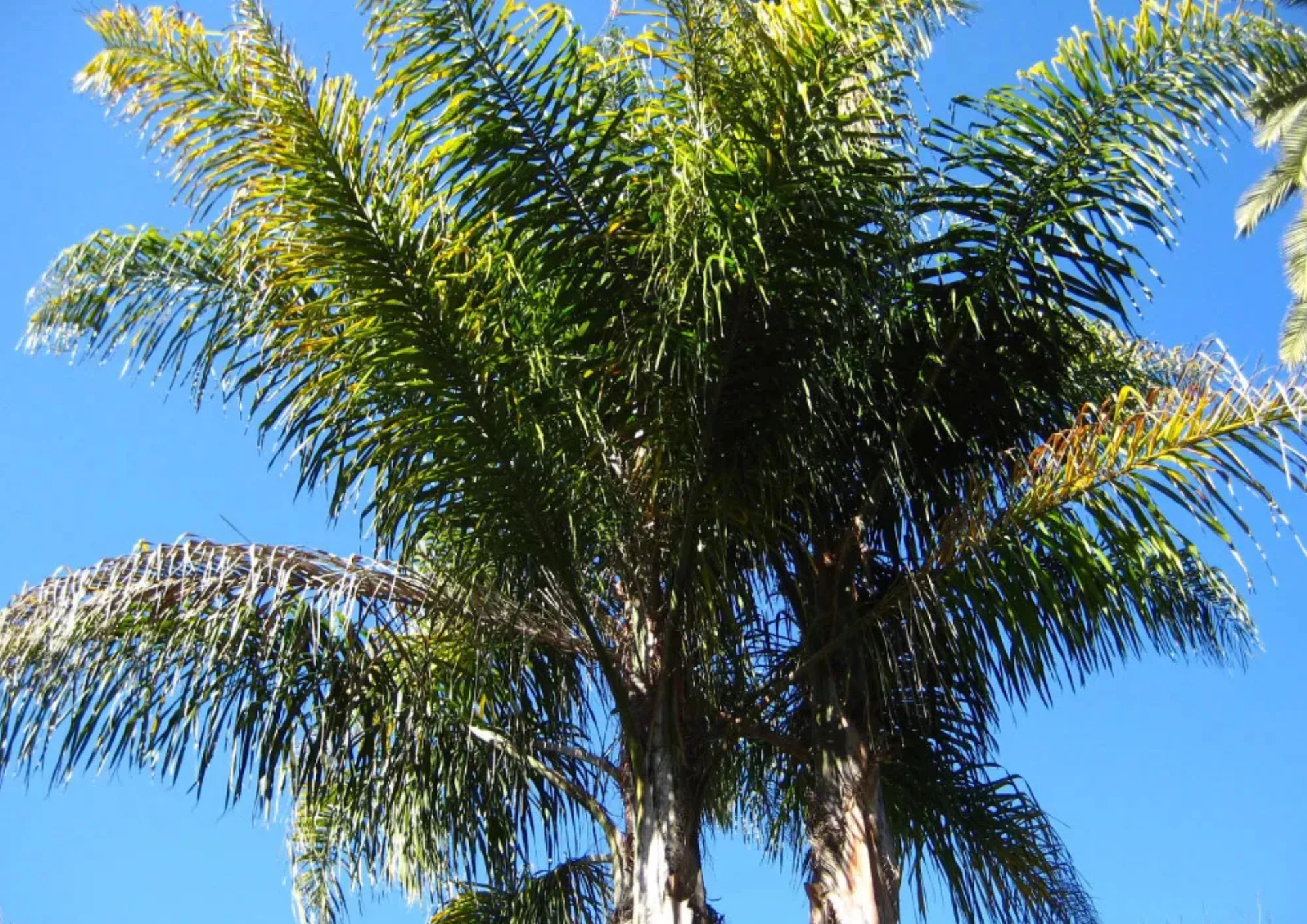
Palm trees grow upward, often reaching heights of 30 to 80 feet depending on species. Fronds extend outward and downward as the tree matures.
When planting or evaluating existing palms, consider:
- Roof overhangs
- Balconies or second story windows
- Pool shade structures
- Power lines
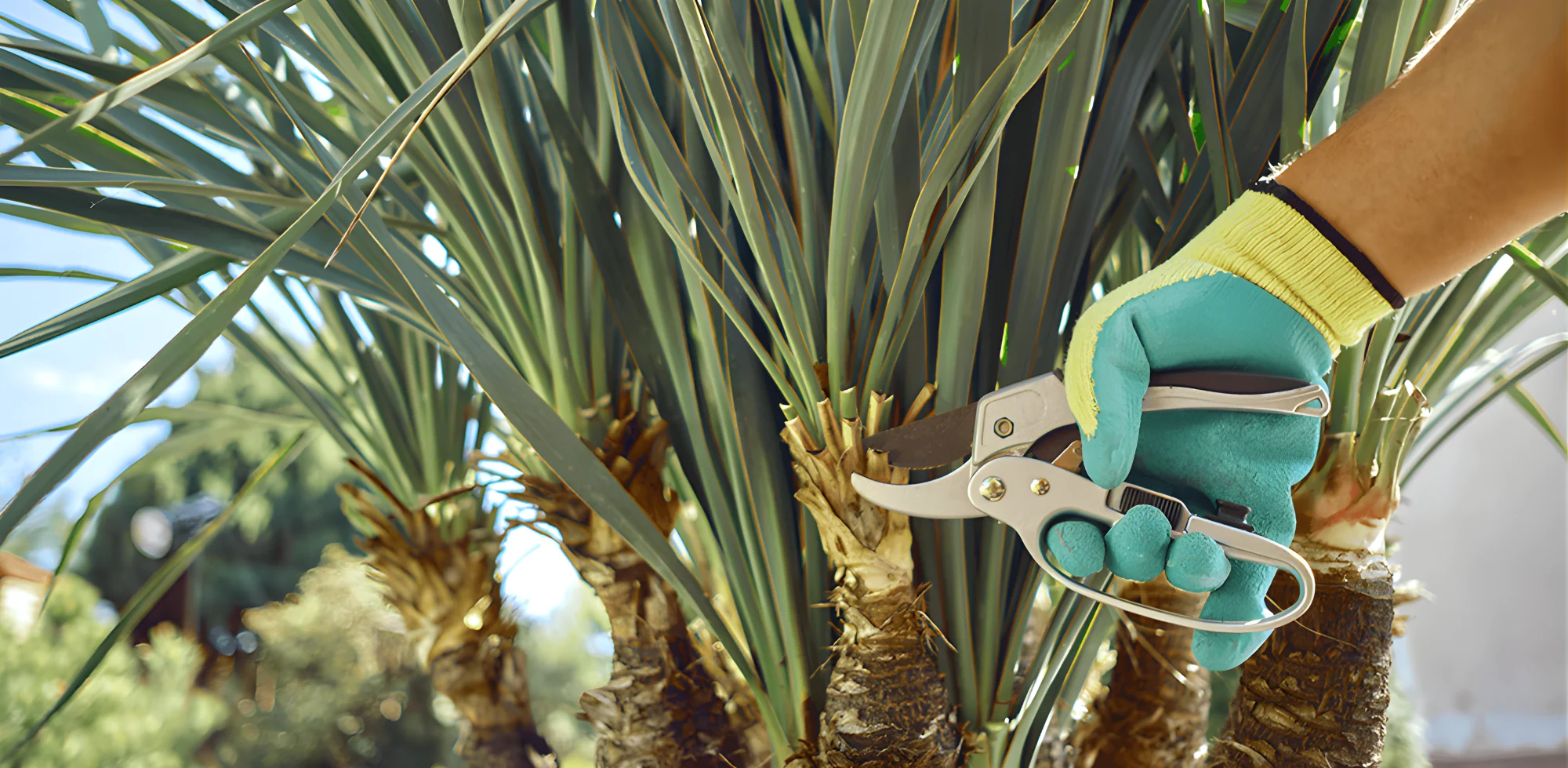
Professional palm tree trimming helps manage canopy spread and reduce interference with nearby structures.
Impact of Falling Fronds
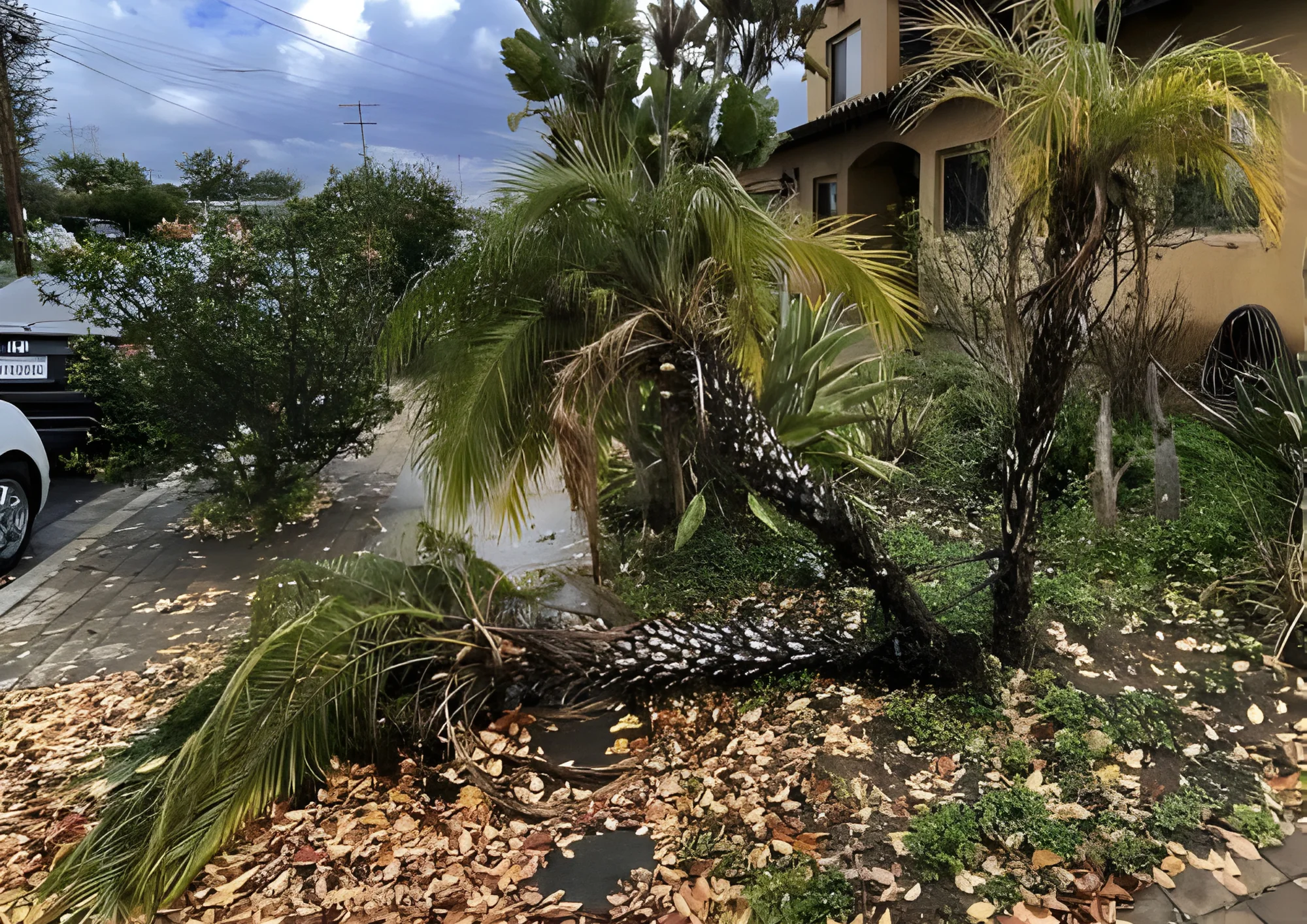
Palm fronds can weigh several pounds when dry. If a palm is planted too close to a house or pool, falling fronds increase the risk of damage or injury.
Regular trimming reduces this risk, but spacing remains critical. Trees planted too close to structures leave little margin for error during storms or high winds.
Proper placement combined with routine maintenance keeps palms safe and manageable.
Watering and Irrigation Considerations
Palms planted near houses or pools often share irrigation zones with turf or landscaping. This can create watering conflicts.
Overwatering palms near foundations may lead to soil movement or moisture buildup near the structure. Underwatering, on the other hand, weakens roots and increases the risk of leaning.
Dedicated irrigation zones or drip systems are ideal for palms planted close to structures.
Common Planting Mistakes
Some common mistakes homeowners make include:
- Planting palms based only on current size rather than mature height
- Placing palms directly against pool decking
- Ignoring overhead obstructions
- Failing to account for frond drop
- Overcrowding multiple palms too closely
Avoiding these mistakes early prevents expensive corrections later.
Can Existing Palms Be Relocated?
In some cases, palms planted too close to structures can be relocated. Success depends on:
- Palm species
- Size and age
- Root condition
- Time of year
Relocation is safest when handled by professionals and should be done before the palm becomes too large.
When Professional Evaluation Is Needed
You should consult a professional if:
- A palm is leaning toward a structure
- Fronds regularly hit roofs or pool areas
- Roots are lifting decking or pavers
- You are planning new construction or landscaping
- You are unsure about safe spacing
Professional evaluation helps determine whether trimming, relocation, or removal is the safest solution.
Conclusion
Palm trees can be planted closer to homes and pools than many other tree species, but spacing still matters. Proper placement protects structures, reduces debris, and ensures long term tree health.
In Phoenix and Scottsdale, thoughtful planning combined with professional palm care helps homeowners enjoy the beauty of palms without unnecessary risk. When in doubt, expert guidance prevents costly mistakes and keeps your landscape safe and attractive.