Introduction
Brown palm fronds are one of the most common concerns homeowners notice in Phoenix and Scottsdale landscapes. While some browning is a normal part of a palm’s growth cycle, rapid or widespread browning often signals a deeper problem.
Arizona’s extreme heat, dry soil, and irrigation challenges can accelerate stress in palm trees. Understanding what causes fronds to turn brown too fast helps property owners take the right corrective steps and avoid unnecessary trimming or removal.
Normal Browning vs Problem Browning
Palm trees naturally shed older fronds as new growth develops. Lower fronds slowly turn yellow, then brown, before being removed during routine trimming. This process is normal.
Problem browning occurs when:
- Green fronds brown prematurely
- Multiple fronds discolor at once
- Browning spreads quickly through the canopy
- New growth is weak or stunted
When browning moves beyond the lowest fronds, the palm is likely under stress.
Improper Watering
Underwatering
Underwatering is a leading cause of brown fronds in Arizona. When palms do not receive deep, consistent watering, fronds dry out from the tips inward. The tree conserves moisture by sacrificing older fronds.
Dry, compacted soil prevents roots from absorbing enough water, even when irrigation is present.
Overwatering
Overwatering can be just as damaging. Saturated soil restricts oxygen to the roots, leading to root rot. When roots cannot function properly, fronds begin to brown due to lack of nutrient and water uptake.
Proper watering involves deep irrigation spaced several days apart rather than frequent shallow watering.
Nutrient Deficiencies
Arizona soil often lacks essential nutrients palms need to stay healthy. Deficiencies commonly associated with browning fronds include:
- Potassium deficiency, causing yellowing and browning along frond edges
- Magnesium deficiency, creating yellow bands on older fronds
- Manganese deficiency, affecting new growth
Without proper fertilization, palms cannot maintain healthy fronds even with correct watering.
Heat Stress and Sun Exposure
Extreme summer heat places heavy stress on palm trees. When temperatures remain high for extended periods, palms lose moisture faster than they can replace it.
Heat stress often causes:
- Browning frond tips
- Crispy leaf texture
- Drooping or curling fronds
Over trimmed palms are especially vulnerable because they lack enough fronds to shade the crown and trunk.
Over Trimming
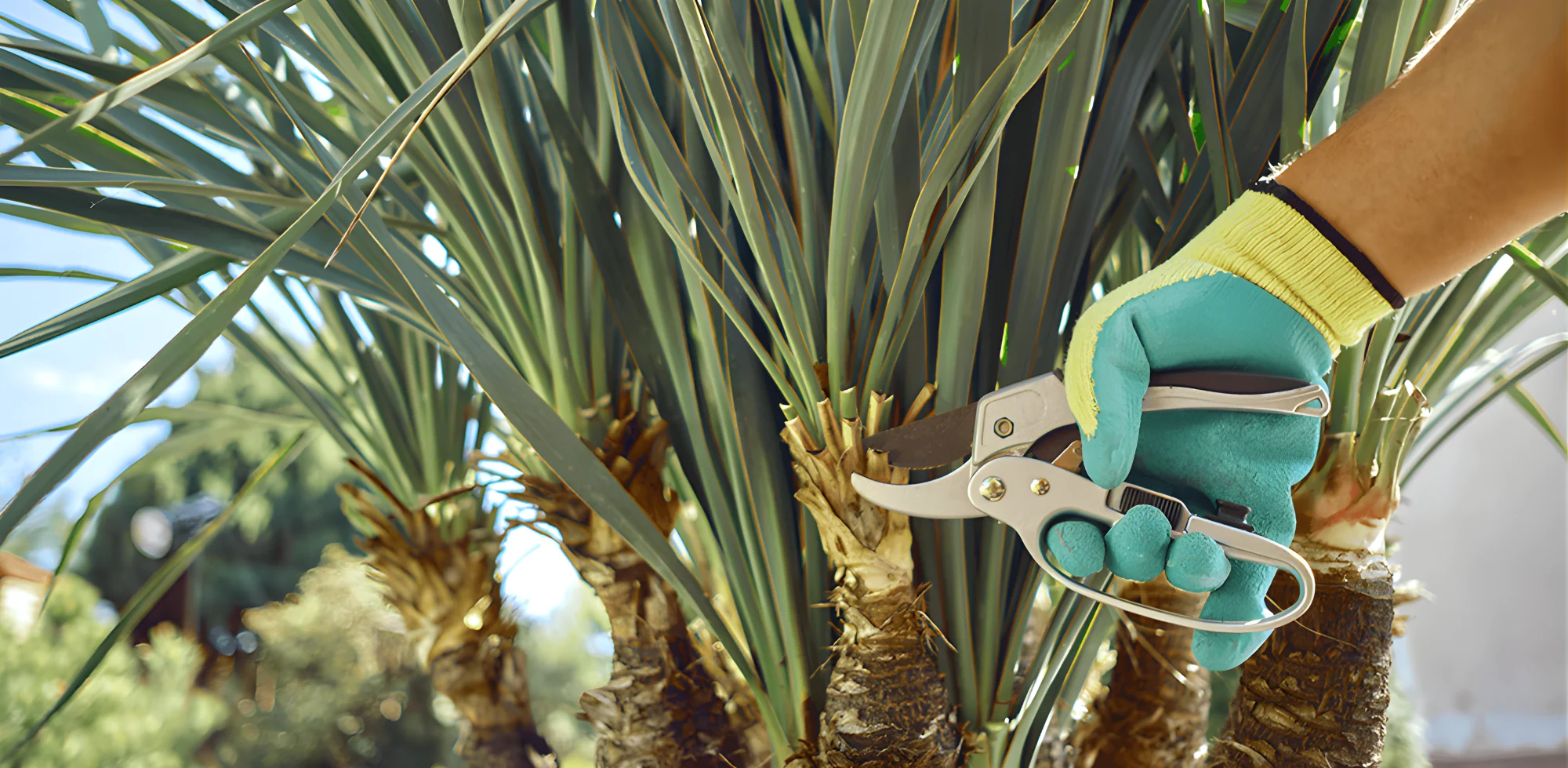
Removing too many green fronds is one of the most damaging mistakes made during palm maintenance. Green fronds are essential for energy production.
Over trimming causes:
- Increased sun exposure
- Reduced energy reserves
- Faster browning of remaining fronds
- Slower new growth
A properly trimmed palm should retain a full, rounded canopy rather than a thin or feathered appearance.
Pests and Disease
Pests can also cause fronds to brown prematurely. Common culprits include insects that damage roots or feed on fronds.
Signs of pest related browning include:
- Spotting or streaking on fronds
- Sudden collapse of fronds
- Damage near the crown
Disease can enter through wounds caused by improper trimming. Once pathogens reach the trunk or crown, browning often progresses rapidly.
Soil Compaction and Root Issues
Compacted soil limits root growth and restricts water and nutrient absorption. Palms planted in high traffic areas or heavy clay soil are more prone to root stress.
Poor root health often results in uneven browning throughout the canopy and reduced stability over time.
Environmental Stress From Transplanting
Recently planted or transplanted palms often experience temporary browning as they adjust. Root disturbance reduces water uptake, causing stress until the root system re establishes.
During this period, palms require careful watering and should not be aggressively trimmed.
Should Brown Fronds Be Removed Immediately?
Brown fronds should not always be removed right away. If browning is caused by stress, removing fronds too soon can worsen the problem.
Fronds should be removed when they are completely brown and dry. Green or partially green fronds should remain until the underlying issue is corrected.
Professional evaluation helps determine the safest trimming approach.
How to Prevent Fronds From Browning Too Fast
Preventive care includes:
- Deep, consistent watering
- Proper fertilization with palm specific nutrients
- Avoiding over trimming
- Soil aeration when needed
- Monitoring for pests and disease
- Seasonal inspections by professionals
Regular maintenance keeps palms resilient and reduces stress related browning.
When to Call a Professional
You should contact a professional palm service if:
- Browning spreads rapidly
- New growth is affected
- Fronds brown despite proper watering
- The palm has not been maintained regularly
- You are unsure whether trimming is appropriate
Professional assessment helps identify the root cause and prevent long term damage.
Conclusion
Palm tree fronds turn brown too fast for many reasons, most of which are related to stress from watering issues, nutrient deficiencies, heat exposure, or improper trimming. In Arizona, early identification and proper care are essential.
With the right maintenance approach, most palms recover and return to healthy growth. Professional palm care ensures problems are addressed correctly and keeps your landscape looking its best.